
Introduction
Artificial Intelligence (AI) is rapidly transforming higher education across the world. From personalized learning tools to automated research assistance, generative AI systems such as ChatGPT, Gemini, and other AI platforms are becoming an integral part of university life. Today’s students are no longer relying solely on textbooks, libraries, and traditional lectures; instead, they are leveraging AI-powered tools to improve their academic performance, enhance creativity, and manage their workload more effectively.
However, while AI offers powerful advantages, it also raises serious concerns about academic integrity, ethics, data privacy, and critical thinking. Universities are now working to develop policies and frameworks that guide students on how to use generative AI responsibly without compromising the quality of education or fairness in assessment.
This article explores how generative AI is reshaping higher education and provides clear, practical guidance on how students can use AI tools ethically, responsibly, and effectively.
Understanding Generative AI in Education
Generative AI refers to artificial intelligence systems capable of producing original content such as text, images, code, audio, and even video. Unlike traditional software, which follows fixed rules, generative AI learns from vast amounts of data and uses machine learning models to generate new information based on user prompts.
In higher education, generative AI is being used in several ways:
- Writing assistance for essays and reports
- Coding help for programming assignments
- Summarizing academic research papers
- Language translation and grammar correction
- Brainstorming ideas for projects and presentations
These capabilities allow students to work faster and more efficiently. However, they also blur the line between assistance and academic misconduct, especially when AI-generated content is submitted as original student work.

The Growing Role of AI in Universities
Universities worldwide are integrating AI into teaching, research, and administration. Educational institutions recognize that AI is not just a temporary trend but a long-term technological shift that will shape the future workforce. As a result, many universities are developing official AI policies that encourage responsible use rather than banning the technology outright.
Research shows that most higher education institutions now allow AI tools in certain contexts, provided students properly acknowledge their use and ensure the final work reflects their own understanding and effort.
This shift reflects a broader recognition that AI literacy is becoming as important as digital literacy or research skills.
Benefits of Generative AI for Students
1. Improved Learning Efficiency
Generative AI helps students understand complex concepts faster by providing instant explanations, examples, and summaries. Instead of spending hours searching for information across multiple sources, students can get concise answers in seconds.
For example, a student struggling with a difficult topic in computer science or economics can ask AI to explain the concept in simpler terms or provide real-world examples.
2. Enhanced Writing and Communication Skills
AI tools can help students improve grammar, sentence structure, clarity, and tone. This is especially beneficial for non-native English speakers who may struggle with academic writing.
Students can use AI to:
- Check grammar and spelling
- Improve academic vocabulary
- Rewrite sentences for clarity
- Format citations correctly
When used responsibly, AI acts as a writing assistant rather than a replacement for original thinking.
3. Support for Research and Idea Generation
Generative AI can assist in brainstorming research topics, generating outlines, and identifying key themes in academic literature. This helps students overcome writer’s block and begin assignments more confidently.
Instead of copying AI-generated text, students can use AI as a starting point and then develop their own arguments and analysis.
4. Personalized Learning Experience
AI tools adapt to individual learning styles. Some students learn better through examples, while others prefer step-by-step explanations. Generative AI can provide customized responses that match the student’s level of understanding, making learning more accessible and inclusive.

Risks and Challenges of Using AI in Higher Education
While AI offers many advantages, it also introduces serious risks that students must understand.
Academic Integrity Violations
One of the biggest concerns is plagiarism and cheating. Submitting AI-generated content as one’s own work is considered academic misconduct in many universities. Institutions emphasize that using AI without proper acknowledgment can violate academic integrity policies just like copying from another student or online source.
Reduced Critical Thinking
Overreliance on AI may weaken students’ ability to think independently, analyze information critically, and develop original ideas. If students rely on AI to generate complete essays or solutions, they may miss the opportunity to build essential intellectual skills.
Inaccurate or Misleading Information
Generative AI systems sometimes produce incorrect or outdated information. Students who rely on AI without verifying sources risk submitting inaccurate content, which can affect their grades and credibility.
Privacy and Data Security Concerns
When students input personal data, research findings, or unpublished academic work into AI platforms, they may unknowingly expose sensitive information. Some AI tools store user prompts and use them to improve future models, raising concerns about data protection.

What Responsible AI Use Means for Students
Responsible AI use in higher education involves using AI tools in ways that support learning rather than replacing it. It means being transparent, ethical, and mindful of academic rules.
Students should understand that AI is a tool—similar to a calculator or a spell checker—not a substitute for their own knowledge and effort.
Responsible use includes:
- Using AI for learning support rather than content generation
- Verifying information before including it in assignments
- Acknowledging AI assistance when required
- Following university policies on AI usage
Practical Guidelines for Ethical AI Use
Always Follow University Policies
Each university and even each course may have different rules about AI usage. Some instructors allow AI for brainstorming and editing, while others prohibit it entirely. Students should carefully read their syllabus and ask instructors if they are unsure about what is allowed.
Ignoring these policies can lead to disciplinary action, including failing grades or suspension.
Use AI as a Learning Tool, Not a Shortcut
Students should treat AI as a tutor rather than a ghostwriter. Instead of asking AI to write a full essay, they should use it to:
- Clarify difficult concepts
- Generate topic ideas
- Suggest structure for an assignment
This approach helps students maintain ownership of their work while still benefiting from AI assistance.
Verify and Fact-Check AI Output
AI-generated content is not always accurate. Students must cross-check information with reliable academic sources such as journals, textbooks, and official websites before using it in their assignments.
Cite AI When Required
Many universities now require students to disclose AI usage in their assignments. This may involve adding a note in the methodology or references section explaining how AI was used in the research or writing process.
Transparency protects students from accusations of plagiarism and demonstrates academic honesty.

How AI is Changing Academic Skills
Generative AI is not just affecting how students complete assignments; it is reshaping the very skills that universities expect students to develop.
Shift from Memorization to Critical Evaluation
In the past, education focused heavily on memorizing facts. With AI now capable of providing instant information, universities are shifting toward assessing students’ ability to evaluate, interpret, and apply knowledge rather than simply recall it.
Increased Importance of Prompt Engineering
Students are learning how to communicate effectively with AI systems by writing clear and precise prompts. This new skill, often called prompt engineering, is becoming valuable in many professional fields.
Greater Emphasis on Original Thought
As AI-generated content becomes more common, educators are placing more value on originality, creativity, and personal insight in student work.

Ethical Considerations in AI-Assisted Learning
Fairness and Equality
Not all students have equal access to advanced AI tools, especially paid versions. This creates concerns about fairness in academic assessment, as some students may gain an advantage simply because they can afford better technology.
Bias in AI Systems
AI models are trained on large datasets that may contain biases. This means AI-generated content may reflect stereotypes or inaccurate perspectives. Students must be aware of this and critically evaluate AI outputs rather than accepting them as objective truth.
Responsibility for AI-Generated Content
Even if AI produces the content, students remain responsible for what they submit. Universities emphasize that the final work reflects the student’s understanding, and therefore the student is accountable for any errors, plagiarism, or misinformation.

The Future of AI in Higher Education
AI will continue to evolve and become even more integrated into education. Experts predict that AI will soon assist in personalized curriculum design, automated grading, virtual tutoring, and advanced research analysis.
Educational organizations and international bodies are already promoting frameworks that ensure AI adoption remains ethical, transparent, and aligned with human-centered values.
This means students who learn to use AI responsibly today will be better prepared for future academic and professional environments. UNESCO Guidance for Generative AI in Education

Best Practices for Students Using Generative AI
To summarize, students should follow these best practices:
- Use AI to support understanding, not replace effort
- Always check course rules before using AI
- Verify AI-generated information with reliable sources
- Avoid submitting AI-generated work as your own
- Disclose AI assistance when required
- Protect personal and research data when using AI tools
By following these principles, students can benefit from AI while maintaining academic integrity and ethical standards.
User Experience in Using Generative AI
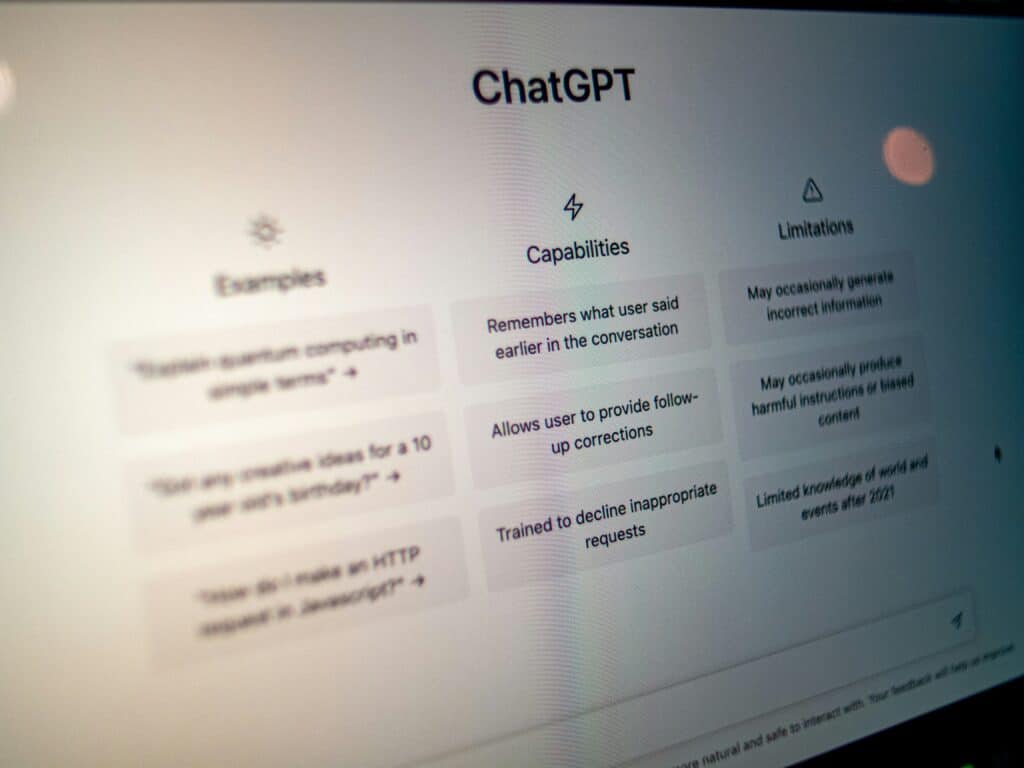
Generative AI tools are popular among students mainly because they are easy to use and provide instant support. With simple chat-based interfaces, students can ask questions, get explanations, and receive writing assistance within seconds. This improves productivity and makes studying more efficient.
AI also creates a more interactive and personalized learning experience, allowing students to explore topics at their own pace. However, students should still verify AI responses, as the information provided may sometimes be inaccurate or incomplete.
When used responsibly, generative AI enhances the learning experience without replacing independent thinking or academic effort.
Conclusion
Generative AI is transforming higher education in ways that were unimaginable just a decade ago. It offers powerful opportunities for personalized learning, improved productivity, and enhanced creativity. However, these benefits come with serious responsibilities.
Students must learn not only how to use AI tools but also how to use them ethically, transparently, and critically. Responsible AI use ensures that education remains meaningful, fair, and focused on developing real knowledge and skills rather than simply producing assignments quickly.
As universities continue to refine their AI policies and teaching methods, students who adopt responsible AI practices will gain a significant advantage. They will not only perform better academically but also develop the digital literacy, critical thinking, and ethical awareness needed to succeed in an AI-driven world.